Moritz Heep

About Me

I am a PhD student at the University of Bonn in the field of Computer Science. My research focuses on the intersection of 3D Reconstruction and Mesh Processing. In particular, at PhenoRob I am working on photometric stereo techniques for the reconstruction of plants.

During my time at the University of Göttingen, I received a Masters degree in Physics and Bachelors degrees in Physics and Mathematics. During my graduate studies, I spent a semester at McMaster University in Canada.
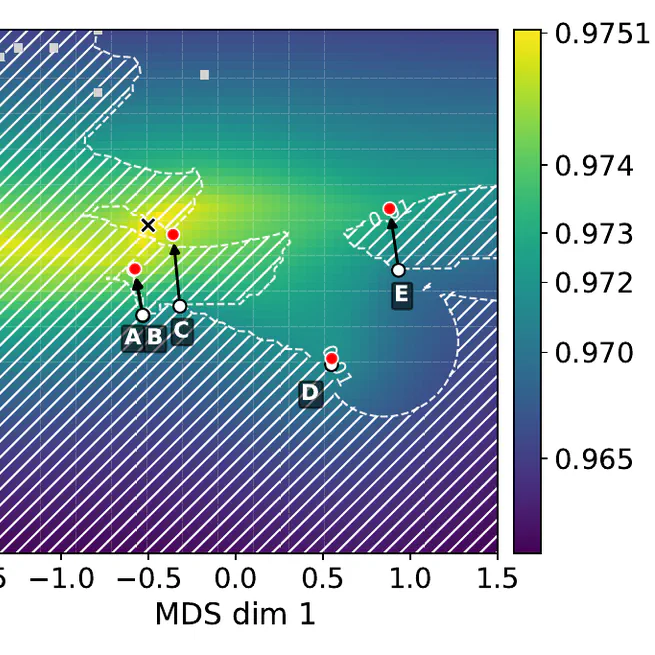
Fast Normal Integration for Photometric Stereo Using Coarse-to-Fine Meshing

Coming soon

Jan 4, 2027

Towards Stellarator Geometry Optimisation for Nuclear Fusion

For additional information, please read the preprint.

Sep 8, 2026

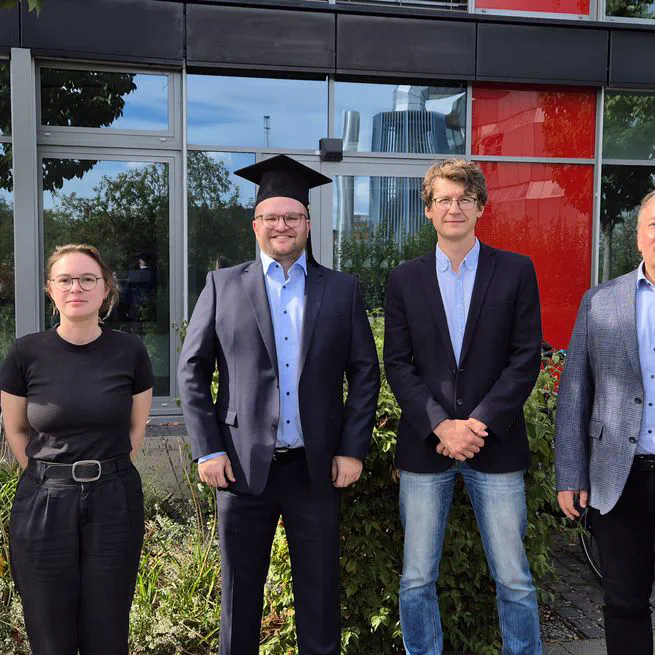
I successfully defended my PhD

I successfully defended my PhD

Sep 2, 2026

Spatial AI Workshop
Spatial AI Workshop

I will be presenting my latest research at the 'Spatial AI Workshop' in Osaka

Oct 4, 2025

University of Osaka
University of Osaka

I started my research stay

Oct 3, 2025

Image Pre-Segmentation from Shadow Masks

Motivation While deep learning methods dominate image segmentation, they struggle with similar colors, complex textures, and require millions of annotated images. We propose a training-free approach that leverages shadow masks from photometric stereo data.

Sep 29, 2025

Feature-Preserving Mesh Decimation for Normal Integration

Motivation Normal integration reconstructs 3D surfaces from normal maps obtained e.g. by photometric stereo. These normal maps capture surface details down to the pixel level but require large computational resources for integration at high resolutions.

Jun 11, 2025

An Adaptive Screen-Space Meshing Approach for Normal Integration

Motivation Increasing the resolution of the normal map improves the accuracy of fine structures but increases computational complexity. In smooth, featureless regions, this added complexity yields little additional information. Our screen-space remeshing pipeline decimates smooth, featureless areas efficiently before the normal integration while preserving high-frequency details.

Oct 1, 2024

ECCV 2024
ECCV 2024

I will be going to ECCV 2024

Sep 29, 2024

Visit my Poster at SIGGRAPH 2024

Visit my Poster at SIGGRAPH 2024

Jul 28, 2024